
Cervical cancer remains a major public health challenge in India, despite advances in screening, vaccination and cancer treatment. While national and global health programmes are working towards eliminating cervical cancer as a public health problem by 2030, achieving this target will require more than early diagnosis and awareness. It will also depend on whether patients can access timely, affordable and effective treatment.
For women diagnosed with locally advanced cervical cancer, radiotherapy and brachytherapy are essential components of treatment. However, access to these services depends on the availability of specialised equipment, adequately designed treatment facilities, trained radiation oncology professionals and reliable hospital infrastructure.
The cervical cancer treatment infrastructure in India therefore deserves greater attention as the country moves towards the WHO’s cervical cancer elimination targets. Although major metropolitan hospitals have developed advanced radiation oncology capabilities, geographical inequalities, equipment limitations and shortages of specialised healthcare professionals continue to affect treatment accessibility.
The central question is whether India’s existing radiotherapy infrastructure and brachytherapy facilities can support the growing demand for cervical cancer treatment and help the country achieve its 2030 elimination ambitions.
Understanding India’s 2030 Cervical Cancer Elimination Goal
The World Health Organization (WHO) has established an ambitious 90-70-90 strategy to accelerate cervical cancer elimination.
Under this strategy, countries are expected to ensure that:
- 90% of girls are fully vaccinated against human papillomavirus (HPV) by the age of 15.
- 70% of women are screened using a high-performance test by the ages of 35 and 45.
- 90% of women identified with cervical disease receive appropriate treatment and care.
While vaccination and screening are critical for preventing cervical cancer, the third target highlights the importance of treatment infrastructure.
Women diagnosed with invasive cervical cancer require access to specialised oncology services, including surgery, chemotherapy, external-beam radiotherapy and brachytherapy, depending on their disease stage and clinical condition.
This makes hospital oncology infrastructure a fundamental part of the elimination strategy. Without sufficient treatment capacity, early detection programmes alone cannot deliver the intended public health benefits.
Radiotherapy Infrastructure: Assessing India’s Treatment Capacity
Radiotherapy is an important treatment modality for cervical cancer, particularly for patients with locally advanced disease. It uses carefully controlled radiation to destroy cancer cells while limiting exposure to surrounding healthy tissues.
A standard radiation oncology department requires more than a radiation delivery machine. It needs a complete treatment ecosystem that includes specialised treatment rooms, imaging facilities, treatment-planning systems, radiation protection arrangements and trained professionals.
Role of Linear Accelerators (LINACs)
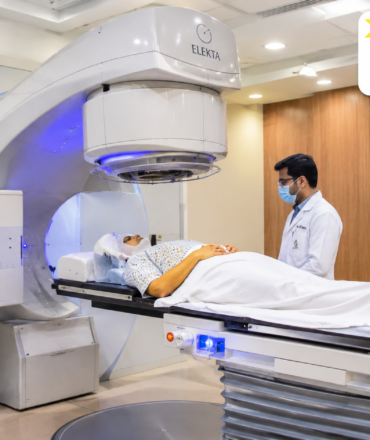
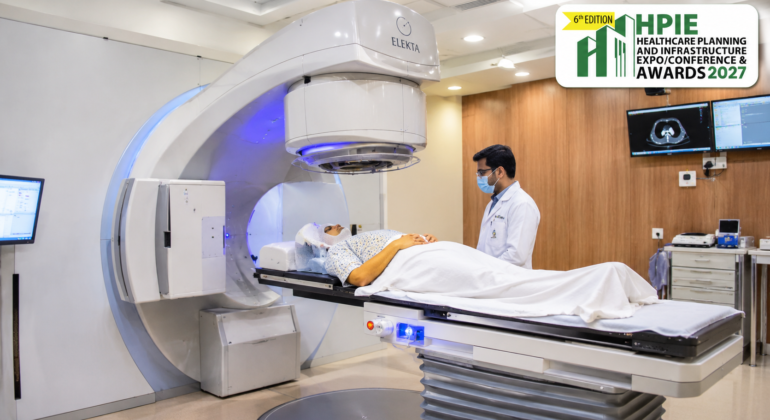
Linear accelerators, commonly known as LINACs, are among the most important machines used in modern external-beam radiotherapy.
These machines deliver high-energy X-rays or electrons to targeted areas of the body. In cervical cancer treatment, external-beam radiotherapy is generally directed towards the pelvis and relevant lymph node regions.
Modern LINAC systems can support advanced treatment techniques such as:
- Intensity-Modulated Radiation Therapy (IMRT).
- Image-Guided Radiation Therapy (IGRT).
- Volumetric Modulated Arc Therapy (VMAT).
These technologies help radiation oncologists deliver treatment with improved precision while reducing unnecessary radiation exposure to nearby organs.
However, installing a LINAC is a substantial infrastructure investment. Hospitals must provide appropriately designed radiation-shielded bunkers, reliable electricity, cooling systems, equipment maintenance arrangements and regulatory approvals.
Equipment availability alone does not guarantee treatment capacity. Hospitals also need qualified medical physicists, radiation therapists, radiation oncologists and engineers to operate and maintain these systems.
CT Simulation and Treatment-Planning Systems
CT simulation plays an essential role in modern radiation treatment.
Before radiotherapy begins, patients undergo imaging to identify the tumour location, surrounding organs and the areas requiring radiation. The resulting images are used to develop an individualised treatment plan.
Specialised treatment-planning systems help medical teams calculate radiation doses and determine how radiation should be delivered.
For cervical cancer, accurate planning is particularly important because the treatment area is close to sensitive organs such as the bladder, rectum and small bowel.
MRI can provide additional soft-tissue information, particularly for defining the extent of cervical tumours and planning brachytherapy. Access to MRI-based planning and appropriate image-fusion capabilities can strengthen treatment precision.
Hospitals seeking to expand their radiotherapy infrastructure must therefore consider imaging and treatment-planning capacity alongside investments in radiation delivery equipment.
Brachytherapy Facilities: A Critical Requirement in Cervical Cancer Treatment
One of the most important infrastructure requirements for cervical cancer treatment is access to brachytherapy.
Brachytherapy is an internal radiation treatment in which a radiation source is placed inside or close to the tumour using specialised applicators. It allows a high radiation dose to be delivered to the target area while limiting exposure to nearby healthy tissues.
For many women receiving definitive radiotherapy for locally advanced cervical cancer, image-guided brachytherapy is an essential component of curative treatment.
Importance of High-Dose-Rate (HDR) Brachytherapy
High-Dose-Rate (HDR) brachytherapy is widely used in modern cervical cancer treatment.
It involves temporarily placing a radioactive source, commonly Iridium-192, inside applicators positioned in or near the tumour. The source is controlled by a remote afterloading machine and delivers radiation according to a carefully calculated treatment plan.
An HDR brachytherapy facility requires:
- A dedicated and appropriately shielded treatment room.
- HDR afterloading equipment and radiation sources.
- Specialised applicators for intracavitary and interstitial treatment.
- Imaging facilities for treatment guidance.
- Computerised brachytherapy treatment-planning systems.
- Radiation monitoring and emergency safety arrangements.
The availability of MRI and CT-based image guidance can improve the identification of tumour boundaries and surrounding organs at risk.
Why Image-Guided Brachytherapy Matters
Image-guided adaptive brachytherapy allows treatment teams to adjust radiation delivery according to the patient’s anatomy and tumour characteristics.
MRI is particularly useful for visualising soft tissues, while CT can also support treatment planning and dose assessment.
The ability to perform intracavitary and interstitial procedures is important because some patients have tumour anatomy that cannot be adequately covered using intracavitary applicators alone.
Despite its clinical importance, brachytherapy availability remains a concern in areas where specialised equipment, imaging support and trained professionals are limited.
Expanding HDR brachytherapy facilities should therefore be a priority in India’s cervical cancer treatment infrastructure planning.
Geographical Distribution of Cancer Treatment Facilities in India
Access to advanced cancer treatment is not evenly distributed across India.
Major metropolitan areas and established cancer centres generally have greater access to radiation oncology equipment, specialised treatment teams and advanced imaging facilities. Cities such as Delhi, Mumbai, Chennai, Bengaluru and Hyderabad have developed significant oncology treatment capabilities.
However, patients from smaller cities, rural communities and economically weaker regions may need to travel considerable distances to receive specialised cancer treatment.
This geographical concentration creates several challenges.
First, patients may experience delays while arranging referrals, transportation and hospital appointments. Second, repeated hospital visits for radiotherapy can create financial and logistical difficulties for families. Third, patients who cannot afford prolonged travel and accommodation may struggle to complete their recommended treatment.
Radiotherapy is generally delivered through multiple treatment sessions over several weeks. Brachytherapy also requires specialised procedures and coordination between clinical teams.
Consequently, geographical accessibility is not simply about whether a hospital has a radiation machine. It is about whether patients can complete the entire treatment pathway without unnecessary delays or interruptions.
India needs a stronger regional network of cancer treatment facilities, with particular attention to underserved states, smaller cities and districts with limited oncology services.
Hospital Oncology Infrastructure: Facility Design, Safety and Quality Assurance
Developing a modern radiation oncology department requires careful planning, regulatory compliance and long-term operational support.
Radiation Shielding and Facility Design
Radiotherapy equipment produces ionising radiation, making radiation protection an essential consideration during hospital construction and renovation.
LINAC treatment rooms require specially engineered shielding structures, including appropriately designed walls, ceilings, floors and access arrangements.
Brachytherapy facilities also require suitable radiation protection measures, controlled access, monitoring equipment and emergency response procedures.
Facility design must follow applicable Atomic Energy Regulatory Board (AERB) requirements and relevant radiation safety standards.
Equipment Commissioning and Quality Assurance
Before clinical use, radiation therapy equipment must undergo appropriate acceptance testing, commissioning and calibration.
Commissioning establishes the technical performance of the equipment and ensures that treatment-planning calculations correspond with actual radiation delivery.
Regular quality assurance is equally important.
Hospitals must establish procedures for checking radiation output, treatment accuracy, imaging performance, mechanical safety and treatment-planning systems.
For brachytherapy, quality assurance also includes checks of source strength, source positioning, applicator integrity and treatment delivery accuracy.
These processes are essential for patient safety and consistent treatment outcomes.
A hospital’s investment in cancer treatment equipment must therefore include provisions for maintenance, quality assurance, regulatory compliance and equipment replacement.
Shortage of Specialised Oncology Professionals: An Overlooked Infrastructure Challenge
Physical infrastructure is only one part of the problem. The availability of trained healthcare professionals is equally important.
A radiation oncology department depends on coordinated work between radiation oncologists, medical physicists, radiation therapists, radiologists, anaesthesiologists, oncology nurses and other supporting professionals.
For image-guided brachytherapy, the requirement for specialised expertise becomes even more important.
Medical teams must be capable of performing applicator placement, interpreting imaging, contouring target areas, calculating radiation doses and managing potential complications.
A shortage of experienced professionals can reduce the number of patients treated by an otherwise well-equipped hospital.
It can also affect appointment availability, treatment planning, equipment utilisation and the ability to offer advanced procedures.
India therefore needs greater investment in specialised oncology education, clinical training programmes, medical physics education and hands-on brachytherapy training.
Regional cancer centres should also strengthen partnerships with established oncology institutions to support knowledge transfer and workforce development.
What Investment Does India Need to Strengthen Cervical Cancer Treatment Infrastructure?
Achieving the 2030 cervical cancer elimination goal will require a coordinated approach to infrastructure development.
Rather than focusing only on purchasing expensive equipment, healthcare planners must develop complete and sustainable treatment facilities.
Some important priorities include:
1. Expanding regional radiotherapy centres: Government hospitals and regional cancer centres should receive support to establish or upgrade LINAC-based radiotherapy services in underserved areas.
2. Increasing access to HDR brachytherapy: Dedicated brachytherapy facilities should be developed alongside external-beam radiotherapy services, ensuring that patients can access both components of treatment.
3. Strengthening diagnostic and imaging infrastructure: CT simulation, MRI access and modern treatment-planning systems should be integrated into hospital oncology infrastructure.
4. Investing in specialised human resources: Medical physicists, radiation oncologists, radiation therapists and oncology nurses require continuous professional training.
5. Improving public-sector treatment capacity: Government hospitals need sustainable funding for equipment procurement, maintenance, staffing and quality assurance.
6. Building regional referral networks: Smaller hospitals should be connected with advanced cancer centres to ensure timely referrals and continuity of treatment.
7. Monitoring infrastructure gaps: National and state-level health authorities should maintain updated information about operational radiotherapy machines, brachytherapy availability, workforce capacity, patient waiting times and geographical accessibility.
The Department of Atomic Energy’s radiotherapy equipment resources and the International Atomic Energy Agency’s Directory of Radiotherapy Centres (DIRAC) can support infrastructure mapping and planning. Such information should be complemented by state-level assessments of actual operational capacity.
Frequently Asked Questions (FAQs)
1. Why is radiotherapy important for cervical cancer treatment?
Radiotherapy is an important treatment for cervical cancer, particularly for locally advanced disease. It is commonly combined with chemotherapy and followed by brachytherapy as part of definitive treatment.
2. What is the role of brachytherapy in cervical cancer?
Brachytherapy delivers radiation directly inside or near the tumour. It allows a high radiation dose to reach the target while limiting exposure to surrounding organs. It is an essential component of curative treatment for many patients with locally advanced cervical cancer.
3. What is the difference between LINAC and HDR brachytherapy?
A LINAC delivers external-beam radiation from outside the body, while HDR brachytherapy delivers radiation through a temporary source positioned inside or close to the tumour. Both can play complementary roles in cervical cancer treatment.
4. Why does India need more radiotherapy facilities?
Additional radiotherapy facilities can improve geographical accessibility, reduce patient travel requirements, support timely treatment and strengthen cancer care capacity, particularly in underserved regions.
5. Can India achieve the 2030 cervical cancer elimination goal without improving treatment infrastructure?
Achieving the elimination target will be difficult without strengthening treatment capacity. Vaccination and screening must be supported by accessible diagnostic, treatment and follow-up services, including radiotherapy and brachytherapy where clinically indicated.
Conclusion: Building Treatment Capacity Is Essential for the 2030 Goal
India’s journey towards cervical cancer elimination requires a healthcare system capable of delivering prevention, early detection, diagnosis and effective treatment.
While HPV vaccination and screening remain essential pillars of the national response, the availability of radiotherapy and brachytherapy will determine whether many women diagnosed with cervical cancer can receive appropriate and timely care.
The cervical cancer treatment infrastructure in India must therefore become a stronger priority in healthcare investment and policy planning. Expanding LINAC facilities, strengthening HDR brachytherapy services, improving imaging infrastructure and addressing shortages of specialised oncology professionals will be critical steps.
The 2030 elimination ambition should not be measured only by vaccination coverage and screening numbers. It should also reflect whether a woman diagnosed with cervical cancer, regardless of where she lives, can access the treatment she needs.
Disclaimer: This article is intended solely for general information and awareness and does not constitute professional advice, recommendation or endorsement; Healthcare Planning Infrastructure assumes no liability for decisions made based on its contents.