
Hospitals are expected to provide a safe and controlled environment where patients can recover, healthcare professionals can work without unnecessary exposure to harmful pollutants, and medical procedures can be performed under strict hygiene conditions. However, an important question is receiving increasing attention: Is the air inside hospitals actually safe to breathe?
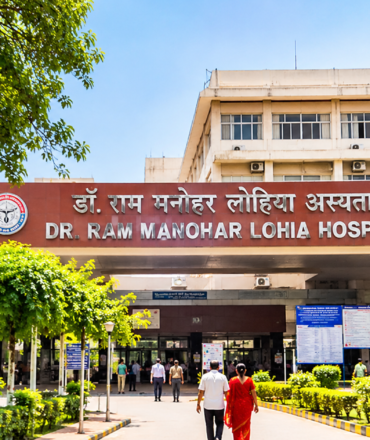
Recent concerns about indoor air quality at AIIMS Delhi have brought this issue into focus. A report published by Newslaundry has highlighted poor air quality in parts of the prestigious healthcare institution, raising questions about the effectiveness of ventilation systems and indoor pollution control in medical facilities. The findings also draw attention to a broader challenge faced by hospitals operating in highly polluted cities such as Delhi.
While outdoor air pollution receives considerable public attention, indoor air quality in healthcare facilities deserves equal consideration. Patients with respiratory diseases, elderly individuals, newborns and people with weakened immune systems may be particularly vulnerable to airborne contaminants.
Hospital Indoor Air Quality is therefore not simply a matter of comfort. It is an essential component of patient safety, infection prevention and healthcare infrastructure management.
Why Hospital Indoor Air Quality Is Becoming a Major Healthcare Concern
Hospitals are complex environments with different departments, patient populations and operational requirements. Emergency departments, intensive care units, operating theatres, laboratories and general wards all have different ventilation needs.
In cities such as Delhi, where outdoor pollution levels can rise dramatically during winter, maintaining clean indoor air becomes particularly challenging. Pollutants can enter healthcare facilities through doors, windows, ventilation intakes and other openings.
Indoor air may also contain particulate matter, chemical emissions, dust, microorganisms and other airborne contaminants generated within the building.
The situation becomes more concerning when ventilation systems are poorly maintained or unable to provide sufficient clean air circulation.
For patients already dealing with asthma, chronic obstructive pulmonary disease (COPD), cardiovascular conditions or other serious illnesses, exposure to polluted indoor air may create additional health risks.
The recent AIIMS Delhi report highlights why hospitals need to examine not only their clinical services but also the environmental conditions in which healthcare is delivered.
Understanding the Role of HVAC Systems in Hospitals
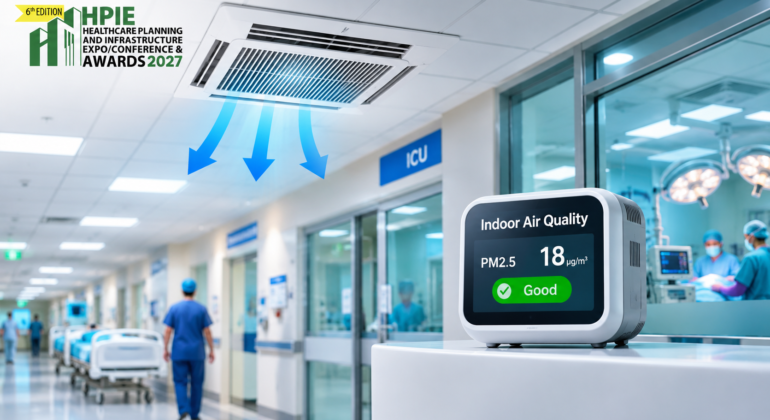
Heating, Ventilation and Air Conditioning (HVAC) systems are among the most important components of modern hospital infrastructure. Unlike ordinary commercial buildings, hospitals require carefully designed air-management systems that support infection control and maintain appropriate environmental conditions.
A hospital HVAC system regulates temperature, humidity, air movement, filtration and ventilation. Its performance can directly influence the quality of air circulating through different clinical areas.
However, simply installing an air-conditioning system does not guarantee safe indoor air.
A properly designed hospital HVAC system should provide adequate outdoor air, remove or dilute indoor contaminants, maintain appropriate pressure differences between departments and support effective filtration.
Different hospital areas also require different operating conditions. For example, an operating theatre needs a controlled environment with specialised filtration and ventilation, while an isolation room may require negative air pressure to prevent contaminated air from spreading into surrounding spaces.
Regular inspection, filter replacement, duct cleaning and performance testing are equally important. Even a technically advanced HVAC installation may become ineffective if maintenance is neglected.
HEPA Filtration: An Important Component of Hospital Air Quality Management
High-Efficiency Particulate Air (HEPA) filters are widely used in healthcare environments where effective airborne particle removal is required.
These filters are designed to capture at least 99.97% of particles measuring 0.3 micrometres under the applicable test conditions for a true HEPA filter. They can help remove dust, pollen, many airborne particles and particle-associated microorganisms from circulating air.
HEPA filtration is particularly relevant in specialised healthcare environments, including certain operating theatres, isolation facilities and other high-risk clinical areas.
However, HEPA filtration should not be considered a complete solution to indoor air pollution.
Its effectiveness depends on proper installation, airflow design, filter integrity and maintenance. Incorrectly fitted filters or air bypass around filter assemblies can reduce their performance.
Hospitals must also understand that filtration and ventilation perform different functions. Filters capture particles, while ventilation helps introduce outdoor air and dilute indoor contaminants.
A comprehensive air-quality strategy should therefore combine suitable filtration, adequate ventilation, appropriate pressure control and regular monitoring.
Air Changes Per Hour: Why Ventilation Rates Matter
One important technical measure used in hospital ventilation design is Air Changes Per Hour (ACH).
ACH indicates how many times the equivalent volume of air in a room is supplied or removed within one hour. It is an important consideration when designing ventilation systems for different healthcare environments.
However, ACH does not automatically mean that every particle or contaminant in a room is completely removed after each air change. Actual air-cleaning performance also depends on airflow patterns, filtration efficiency, mixing and other environmental factors.
Different hospital departments require different ventilation arrangements.
For instance, operating theatres generally require higher ventilation performance and carefully controlled airflow compared with ordinary administrative spaces. Isolation rooms also need specific ventilation arrangements depending on whether they are designed for airborne infection isolation or protective isolation.
Hospitals should follow applicable engineering guidance and healthcare ventilation standards rather than applying a single ventilation rate throughout the building.
Regular ventilation assessments can help identify areas where airflow is insufficient, ventilation equipment is underperforming or air distribution is not functioning as intended.
Pressure-Controlled Environments and Hospital Infection Prevention
Air pressure management is another essential aspect of hospital ventilation.
Healthcare facilities use positive and negative pressure environments for different infection-control purposes.
Positive Pressure Rooms
Positive pressure rooms maintain higher air pressure inside the room compared with adjacent areas. When doors are opened, air generally moves outward, helping protect vulnerable patients from contaminants entering from surrounding spaces.
These environments are commonly used in certain protective isolation settings.
Negative Pressure Rooms
Negative pressure rooms maintain lower air pressure than surrounding areas. This encourages air to move into the room rather than allowing potentially contaminated air to escape into corridors or neighbouring clinical spaces.
They are particularly important for managing patients with infections that can spread through airborne transmission.
Both arrangements require proper engineering, continuous or appropriate pressure monitoring, functioning ventilation equipment and regular maintenance.
Poorly maintained pressure-control systems can compromise the intended infection-control arrangements.
For hospitals, maintaining these environments is not just an engineering responsibility. It is an important part of the wider patient safety and infection prevention programme.
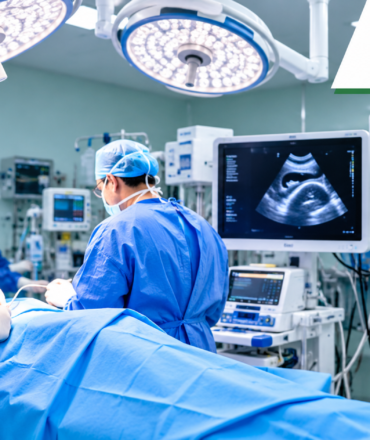
Operating Theatre Ventilation: Protecting Patients During Surgery
Operating theatres require particularly careful environmental control because surgical procedures expose patients to conditions where infection prevention is critical.
The ventilation system must support appropriate air cleanliness, temperature, humidity and airflow conditions.
Many modern operating theatres use high-efficiency filtration and carefully designed air distribution systems to reduce airborne contamination.
The objective is to minimise the introduction and circulation of airborne particles around the surgical environment.
Hospitals should regularly evaluate operating theatre ventilation performance, inspect filtration equipment, monitor pressure relationships and ensure that maintenance activities follow established protocols.
Ventilation requirements may differ according to the type of operating theatre, surgical procedures and applicable national or international standards.
A well-maintained ventilation system, combined with sterilisation, surgical hygiene and infection prevention protocols, contributes to a safer operating environment.
Indoor Particulate Monitoring and Regular Hospital Air Quality Audits
One of the biggest challenges in managing indoor pollution is that poor air quality is not always visible.
A hospital may appear clean while indoor particulate concentrations remain elevated. This makes regular environmental monitoring an important part of healthcare infrastructure management.
Hospitals should consider monitoring:
- PM2.5 and PM10 particulate concentrations.
- Carbon dioxide (CO2) as an indicator of ventilation adequacy and occupancy-related ventilation concerns.
- Temperature and relative humidity.
- Airflow and ventilation performance.
- Pressure differences in controlled clinical environments.
- Filter condition and HVAC equipment performance.
Carbon dioxide monitoring should be interpreted carefully. CO2 is not a direct measurement of infection risk or overall indoor air quality, but elevated levels in occupied spaces can indicate insufficient outdoor air ventilation relative to occupancy.
Regular hospital air-quality audits can help identify ventilation failures, filtration problems and areas requiring corrective action.
These assessments should be conducted by qualified professionals using appropriate instruments and established testing procedures.
Hospitals should also maintain documented inspection schedules, equipment maintenance records and corrective-action reports.
What Hospitals in Highly Polluted Cities Like Delhi Should Do
Healthcare facilities in highly polluted urban environments face an additional challenge because outdoor pollution can affect indoor air quality.
During severe pollution episodes, hospitals need to pay particular attention to the location and condition of outdoor air intakes, filtration performance and building air leakage.
Some practical measures include strengthening HVAC maintenance programmes, using appropriate filtration for outdoor air, inspecting doors and windows for unwanted air infiltration and monitoring indoor particulate concentrations.
Hospitals should also develop specific procedures for periods when outdoor pollution reaches unhealthy levels.
These procedures should balance the need to reduce pollutant entry with the need to maintain adequate ventilation. Simply sealing buildings or reducing outdoor air supply without engineering assessment can create other indoor air-quality problems.
Healthcare administrators, facility managers, infection-control teams and biomedical engineering departments should work together to establish clear accountability for indoor environmental safety.
The AIIMS Delhi indoor air-quality concerns provide an opportunity for healthcare institutions to examine whether their existing ventilation and environmental monitoring arrangements are delivering the intended protection.
Frequently Asked Questions (FAQs)
1. What is Hospital Indoor Air Quality?
Hospital Indoor Air Quality refers to the condition of air inside healthcare facilities, including the levels of particulate matter, airborne contaminants, chemical pollutants, ventilation adequacy, temperature and humidity.
2. Why are HVAC systems important in hospitals?
HVAC systems regulate airflow, temperature, humidity and filtration. Properly designed and maintained systems help reduce airborne contaminants, support infection prevention and maintain suitable environmental conditions in different hospital departments.
3. How do HEPA filters improve hospital air quality?
HEPA filters capture at least 99.97% of particles measuring 0.3 micrometres under standard test conditions. They help remove airborne particles from filtered air when correctly installed and maintained.
4. What is ACH in hospital ventilation?
ACH stands for Air Changes Per Hour. It measures the equivalent volume of air supplied or removed from a room over one hour. Ventilation requirements vary according to the function and risk level of each hospital area.
5. How can hospitals monitor indoor air pollution?
Hospitals can use indoor air-quality monitoring equipment to measure PM2.5, PM10, carbon dioxide, temperature and humidity. They should also conduct ventilation performance assessments, pressure checks and regular HVAC maintenance audits.
Conclusion: Indoor Air Quality Must Become a Healthcare Priority
The growing attention on Hospital Indoor Air Quality highlights an important issue that healthcare institutions cannot afford to overlook. Hospitals are designed to protect and treat patients, but their indoor environments must also be safe.
The concerns raised about air quality in parts of AIIMS Delhi underline the importance of evaluating ventilation systems, filtration arrangements and environmental monitoring practices across healthcare facilities.
Investments in properly designed HVAC infrastructure, HEPA filtration where appropriate, pressure-controlled environments and regular air-quality audits can strengthen hospital safety measures.
Healthcare quality should not be measured only through medical technology, specialist expertise and treatment outcomes. The environment in which patients receive care also matters.
As India continues to face serious urban air pollution challenges, hospitals must treat clean indoor air as an essential part of patient safety and healthcare infrastructure.
Disclaimer: This article is intended solely for general information and awareness and does not constitute professional advice, recommendation or endorsement; Healthcare Planning Infrastructure assumes no liability for decisions made based on its contents.