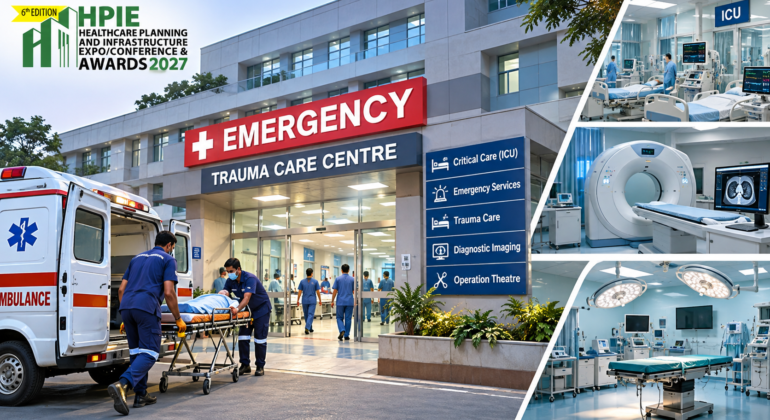

India’s healthcare system has made considerable progress in expanding medical facilities, improving access to treatment and strengthening hospital infrastructure. However, when a medical emergency occurs, the availability of timely and effective treatment can still vary significantly depending on where a patient lives. For people in smaller cities, rural areas and remote districts, reaching a hospital with adequate emergency facilities remains a major challenge.
From road accidents and cardiac emergencies to strokes, severe infections and other life-threatening conditions, emergency situations require immediate medical attention. Delays in diagnosis, transportation or treatment can significantly affect patient outcomes. This makes strengthening Emergency Care Infrastructure in India an important priority for the country’s healthcare development.
District hospitals play a particularly important role in this process. As major public healthcare facilities serving large populations, they are often the first point of referral for patients requiring specialised medical attention. Strengthening their emergency departments, trauma facilities, diagnostic services and critical-care capacity could help reduce pressure on larger hospitals while improving access to essential treatment.
The next phase of healthcare expansion must therefore focus not only on increasing hospital capacity but also on ensuring that emergency facilities are properly planned, equipped, staffed and operational.
Why Emergency Care Infrastructure in India Needs Greater Attention
Emergency healthcare depends on several interconnected services working together. A patient experiencing a serious medical condition may require ambulance transportation, immediate assessment, diagnostic testing, stabilisation and specialised treatment within a short period.
If any part of this chain is weak, the entire response can be affected.
In many districts, healthcare facilities face challenges such as limited emergency department space, inadequate critical-care beds, shortages of trained personnel and insufficient diagnostic equipment. Some hospitals may have the necessary infrastructure on paper but struggle with operational readiness because of staffing gaps, maintenance issues or inefficient patient management systems.
These challenges highlight the importance of developing a coordinated approach to emergency healthcare.
Strengthening Emergency Care Infrastructure in India requires investment in physical facilities as well as improvements in hospital management, medical technology, workforce training and referral networks.
District Hospital Infrastructure: The Foundation of Emergency Healthcare
District hospitals occupy a critical position between primary healthcare facilities and advanced tertiary-care hospitals. They serve as important referral centres for patients who need services beyond the capabilities of smaller healthcare facilities.
However, the growing demand for emergency treatment requires district hospitals to expand their infrastructure and improve their ability to manage complex medical conditions.
Developing Modern Emergency Departments
An effective emergency department should provide immediate access to medical assessment, resuscitation, stabilisation and treatment. Its design should allow patients to be categorised according to the severity of their conditions so that those requiring urgent attention receive priority.
Hospitals need clearly defined areas for emergency registration, triage, resuscitation, observation and treatment. Separate arrangements for critical patients, general emergencies and minor injuries can improve patient movement and reduce congestion.
The availability of round-the-clock medical teams, nursing staff and essential emergency equipment is equally important.
Improving Hospital Capacity and Patient Flow
Increasing the number of hospital beds alone cannot address every emergency healthcare challenge. Hospitals must also ensure that available beds are supported by adequate nursing staff, medical equipment, oxygen supply and diagnostic services.
Better coordination between emergency departments, operation theatres, intensive care units and inpatient wards can help reduce delays in patient admission and treatment.
Trauma Care Centres in India: Building a Stronger Response System
Road traffic accidents, industrial injuries, falls and other traumatic incidents create a significant demand for specialised emergency services. Patients with severe injuries may require immediate surgical intervention, blood transfusion, imaging and intensive monitoring.
This makes the development of well-equipped Trauma Care Centres in India an important part of national healthcare planning.
Essential Facilities for Trauma Management
A functional trauma centre requires more than emergency beds and basic medical equipment. It needs a coordinated team capable of managing multiple types of injuries.
Essential facilities include dedicated resuscitation areas, emergency operation theatres, blood storage or transfusion support, advanced imaging, intensive care beds and post-operative monitoring facilities.
Hospitals should also establish clear protocols for managing head injuries, spinal trauma, fractures, internal bleeding and multiple injuries.
Connecting Trauma Centres Through Referral Networks
Not every district hospital can provide advanced trauma surgery or specialised neurological care. However, every district should have a clearly defined referral arrangement with higher-level hospitals.
A strong referral network allows patients to receive initial stabilisation before being transferred to facilities capable of providing advanced treatment.
Effective communication between ambulance teams, district hospitals and referral centres can reduce unnecessary delays and improve coordination.
Critical Care Infrastructure: Preparing Hospitals for Life-Threatening Emergencies
Critical-care facilities are essential for patients whose conditions require continuous monitoring, respiratory support or advanced medical intervention.
The expansion of Critical Care Infrastructure must therefore remain a central part of district hospital development.
Expanding ICU and High-Dependency Facilities
Intensive care units provide specialised treatment for patients experiencing severe infections, respiratory failure, cardiac complications, major injuries and other life-threatening conditions.
District hospitals need appropriately planned intensive care capacity supported by trained doctors, critical-care nurses, ventilators, patient monitors and reliable oxygen systems.
High-dependency units can also help manage patients who require closer observation than general wards but may not need full intensive care.
The availability of these facilities can reduce avoidable referrals to tertiary hospitals and improve access to critical treatment closer to patients’ communities.
Ensuring Reliable Oxygen and Medical Gas Systems
Oxygen availability is fundamental to emergency and critical care. Hospitals require dependable oxygen supply systems, backup arrangements, distribution pipelines and regular equipment maintenance.
Medical gas infrastructure should be included in hospital planning from the beginning rather than treated as an additional facility after construction.
Diagnostic Infrastructure and Emergency Imaging
Timely diagnosis is essential when treating patients with serious medical conditions. Emergency departments need access to diagnostic services that can operate around the clock.
Limited access to imaging and laboratory testing can delay treatment decisions, particularly in cases involving stroke, internal bleeding, cardiac conditions and serious injuries.
Strengthening Emergency Diagnostic Facilities
District hospitals should assess their requirements for essential diagnostic services, including:
- Digital X-ray facilities for fractures and chest conditions.
- CT scanning for head injuries, strokes and internal trauma.
- Ultrasound facilities for emergency assessment.
- ECG and cardiac monitoring systems.
- Emergency laboratory testing for blood counts, electrolytes and other essential parameters.
The availability of equipment must be supported by trained radiology technicians, laboratory professionals and maintenance teams.
Digital reporting systems and tele-radiology arrangements can also help hospitals access specialist interpretation when on-site expertise is limited.
Emergency Healthcare Services: Why Ambulance Networks Matter
Hospital infrastructure cannot deliver effective emergency treatment if patients cannot reach medical facilities in time.
Pre-hospital care is an important part of Emergency Healthcare Services because treatment and stabilisation may need to begin before a patient reaches the hospital.
Strengthening Ambulance and Emergency Response Systems
Ambulances should be equipped according to their designated level of care and the needs of the communities they serve. Basic life-support and advanced life-support ambulances can provide different levels of emergency assistance.
However, the availability of vehicles alone is not enough. Emergency response systems also require trained paramedics, communication facilities, dispatch coordination and clearly defined transport protocols.
Integrating Ambulances with District Hospitals
Ambulance teams should be able to communicate with receiving hospitals before arrival. Sharing basic information about the patient’s condition allows emergency departments to prepare the required medical team, equipment and treatment area.
This is particularly important for patients experiencing heart attacks, strokes, severe injuries and other time-sensitive medical emergencies.
A coordinated pre-hospital system can help reduce avoidable delays between the incident, transportation and definitive treatment.
Hospital Emergency Planning: Moving Beyond Construction to Operational Readiness
Expanding hospital buildings and installing medical equipment are important steps, but they do not automatically create functional emergency services.
Effective Hospital Emergency Planning must consider how facilities will operate during routine emergencies as well as periods of unusually high patient demand.
Planning Infrastructure Around Actual Healthcare Needs
Hospital planning should begin with an assessment of the population served, disease patterns, road accident risks, referral requirements and existing healthcare capacity.
The design should consider emergency patient movement, access to diagnostic facilities, ICU connectivity, operation theatre availability, medical gas systems, electrical backup and infection prevention arrangements.
Proper space allocation can also reduce unnecessary movement between departments and improve coordination among healthcare teams.
Ensuring Equipment Availability and Maintenance
Medical equipment must remain functional and accessible whenever emergencies occur.
Hospitals should establish regular maintenance schedules, equipment performance checks and replacement plans. Critical devices such as ventilators, defibrillators, monitors, suction machines and infusion pumps require particular attention.
Equipment procurement should be accompanied by installation, staff training, maintenance support and operational testing.
Investing in Skilled Emergency Healthcare Personnel
Infrastructure is only as effective as the people operating it. Emergency departments require trained doctors, nurses, paramedics, radiology technicians, laboratory professionals and biomedical engineers.
Regular training in basic life support, advanced life support, trauma management, triage and emergency response protocols can strengthen hospital preparedness.
Simulation exercises and periodic emergency drills can also help teams identify gaps in coordination and improve their response during real incidents.
The Road Ahead: Building a More Resilient Emergency Healthcare System
The future of Emergency Care Infrastructure in India will depend on how effectively healthcare authorities translate infrastructure expansion into accessible and reliable services.
District hospitals should be viewed as essential components of a wider emergency healthcare network rather than isolated medical facilities.
Government investment, public-private partnerships, technology integration and better hospital project management can support this transition. However, each initiative must be supported by realistic operational planning and continuous performance monitoring.
Healthcare planners should evaluate emergency department functionality, critical-care capacity, ambulance response coordination, equipment availability and workforce readiness.
The objective should be to create hospitals that can respond effectively when patients need immediate medical attention, regardless of their geographical location.
India’s healthcare expansion will be more meaningful when the benefits of improved infrastructure reach district-level populations and emergency treatment becomes more accessible, coordinated and dependable.
Frequently Asked Questions (FAQs)
1. What is Emergency Care Infrastructure in India?
Emergency Care Infrastructure in India refers to the hospitals, emergency departments, trauma centres, intensive care units, diagnostic facilities, ambulances, medical equipment and trained healthcare professionals required to manage urgent and life-threatening medical conditions.
2. Why are district hospitals important for emergency healthcare?
District hospitals provide essential secondary-level medical services and act as referral centres for surrounding communities. Strengthening their emergency facilities can improve access to treatment and reduce unnecessary pressure on tertiary-care hospitals.
3. What facilities are required in a trauma care centre?
A trauma care centre generally requires emergency resuscitation areas, imaging facilities, operation theatres, blood transfusion support, intensive care beds, emergency equipment and trained trauma management professionals.
4. How can hospitals improve their emergency response systems?
Hospitals can improve emergency response through better triage systems, trained medical teams, functional diagnostic equipment, coordinated ambulance networks, reliable oxygen supplies and regular emergency preparedness drills.
5. Why is critical-care infrastructure important in district hospitals?
Critical-care infrastructure enables hospitals to manage patients with severe illnesses, serious injuries and life-threatening complications. Adequate ICU capacity, ventilators, monitoring systems and trained personnel can improve access to advanced treatment.
Conclusion
Strengthening emergency and trauma services is essential for building a more accessible and resilient healthcare system in India. While the expansion of hospitals and medical facilities remains important, equal attention must be given to staffing, equipment, diagnostic capabilities, ambulance networks and operational preparedness.
District hospitals have an opportunity to become stronger centres for emergency stabilisation and treatment. With better infrastructure planning, sustained investment and coordinated healthcare delivery, India can move towards a system where timely emergency care is available to a larger section of the population.
For healthcare institutions, hospital developers, medical equipment providers and infrastructure planners, this is an important opportunity to contribute to the next phase of healthcare development.
Disclaimer: This article is intended solely for general information and awareness and does not constitute professional advice, recommendation or endorsement; Healthcare Planning Infrastructure assumes no liability for decisions made based on its contents.