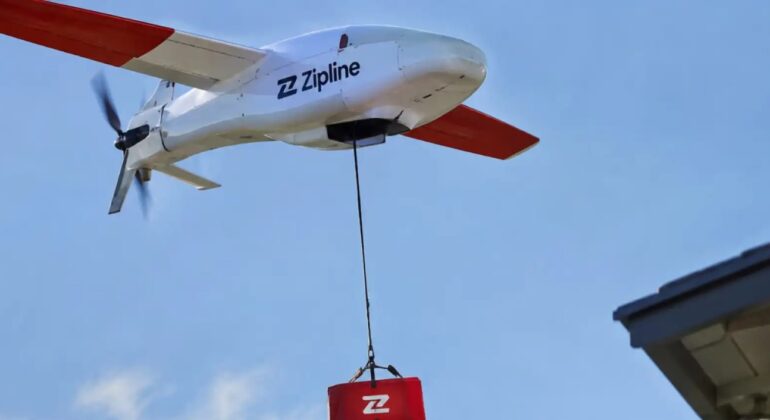

Autonomous drone delivery company Zipline has raised $1.5 billion in a funding round at a post-money valuation of $21.5 billion, as it accelerates plans to build a nationwide drone delivery network in the United States and expand its manufacturing capabilities.
The funding round was led by Paradigm, WCM Investment Management and Layer Global, with participation from Valor Equity Partners, Fidelity Management & Research Company, Uber, Tiger Global, J.P. Morgan, ARK Invest and Salesforce Ventures.
Zipline plans to use the capital to expand its US manufacturing facilities, increase its workforce and strengthen the operational infrastructure required to scale autonomous deliveries. The latest valuation represents a significant increase from the company’s earlier $7.6 billion valuation following a funding round in January 2026.
Alongside the fundraising announcement, Zipline revealed an expanded multi-year agreement with Walmart to establish 300 additional drone delivery sites across the United States. The partnership is expected to significantly increase the reach of its commercial delivery network. Uber is also targeting one million daily deliveries through its partnership with Zipline by 2029.
While the company’s growing commercial operations include food, retail and consumer deliveries, healthcare remains an important part of its business. Zipline initially gained international recognition through its use of autonomous drones to transport blood and essential medical supplies to healthcare facilities in countries with challenging road connectivity.
The company currently operates across multiple continents, delivering blood, vaccines and other medical products to health facilities. According to Zipline, its long-range medical delivery operations help save more than 14,000 lives annually.
In Côte d’Ivoire, the company is developing a nationwide drone delivery network expected to serve more than 2,200 healthcare facilities and reach approximately 12 million people. The initiative is aimed at improving access to essential medical supplies, particularly in remote and underserved communities.
Zipline has also introduced next-generation aircraft designed to fly more quietly, carry heavier deliveries and cover longer distances. The company reports that it has completed 150 million commercial autonomous miles without a safety incident.
The latest investment highlights growing investor confidence in autonomous logistics and the potential of drone-based delivery systems to transform supply chains. For healthcare, the technology could offer an alternative to conventional transportation for time-sensitive medical products, particularly where geographical barriers and road infrastructure limit timely access.
However, expanding commercial drone operations will continue to depend on aviation regulations, operational safety requirements and public acceptance as companies move towards larger delivery networks.
By Healthcare Planning Infrastructure Bureau